
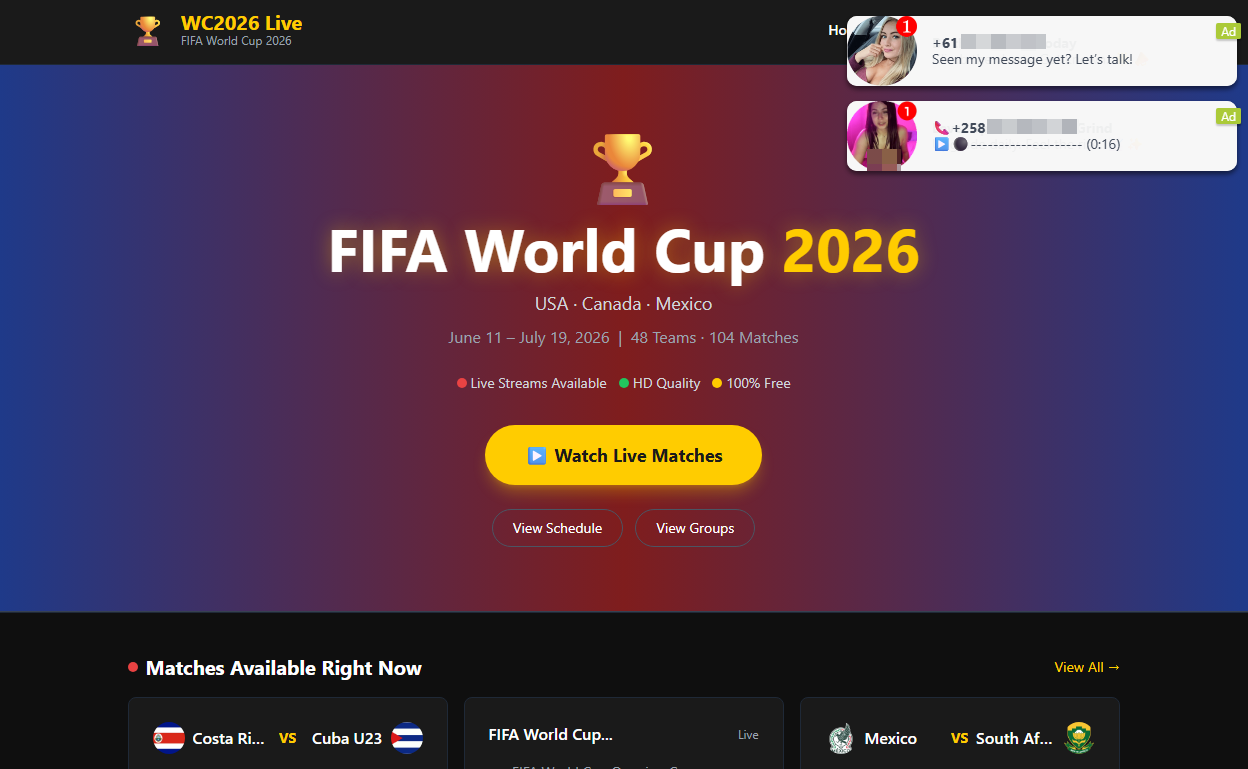
With the World Cup on, you’ll find no shortage of websites promising every match, live, in HD, for free. They look convincing, usually with a video player, a “Live Stream Available” indicator, a row of server buttons, maybe a match schedule, and a “Watch Live” button. There’s no signup, no paywall, and seemingly, no catch.
But of course there’s a catch. These sites aren’t really in the business of streaming football. What the page is really built to do is fire pop-ups, hidden ads, and redirects through an advertising network we detect as malicious. Instead of watching the match, visitors end up facing scams, malware, and fraudulent downloads.
Here’s how the scam works and how to stay out of it.
If they’re not real streaming sites, what are they?
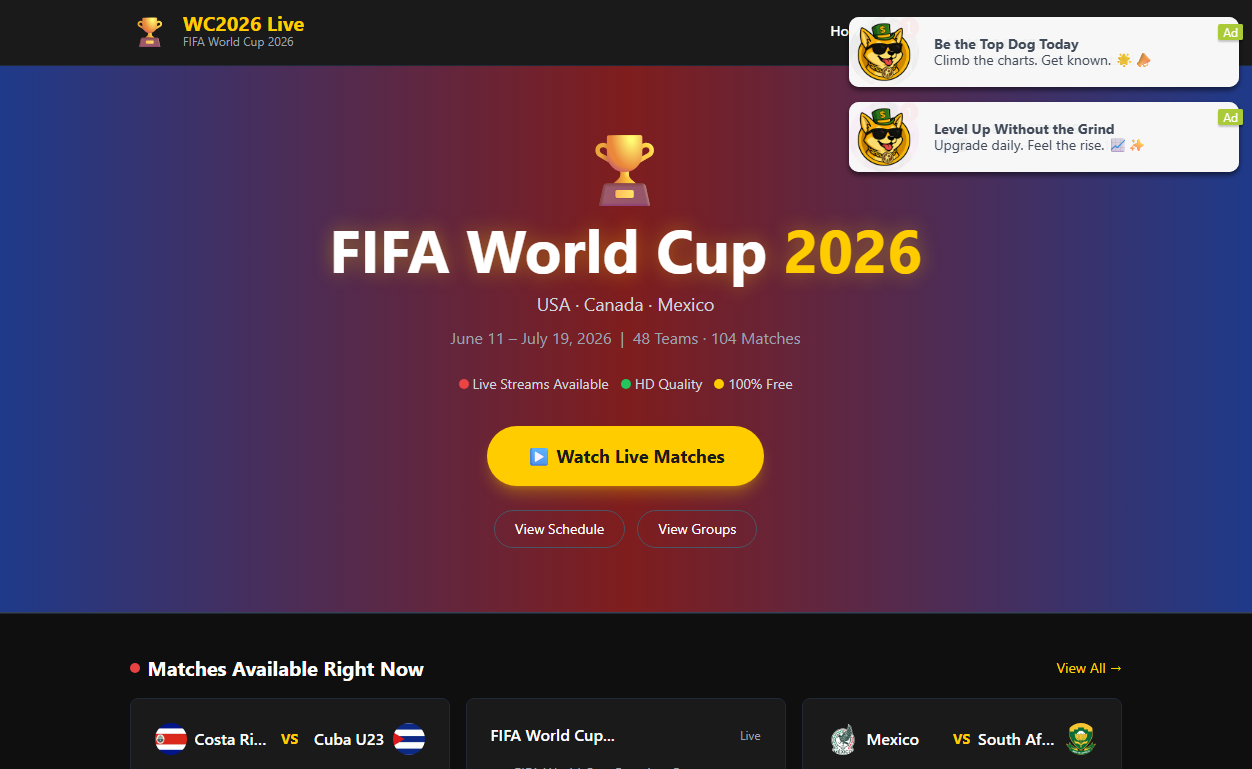
We’ve identified more than 40 websites that are effectively identical. They use different World Cup-themed names, but behind the scenes they’re running the same page template, the same code, and the same advertising infrastructure.
A script generates a separate page for every match, making the operation cheap to run and easy to scale.
When a stream appears at all, it’s usually embedded from a third-party piracy service. The real business is the advertising surrounding the player.
A typical page loads eight or more ad and tracking scripts from the same shady network, plus a handful of other ad domains. The hub the whole page is wired to is a domain we detect as malicious. Your data is the product; the “stream” is the bait.
Why these sites are dangerous, not just annoying
It’s tempting to shrug this off as the usual price of free streams. But it’s worse than facing a few annoying ads.
The real threat is the ad network. This isn’t mainstream, vetted advertising. The kind of ad network we flag as malicious is a common delivery route for the stuff that causes harm: fake virus warnings, bogus software update prompts that install malware, fake prize and verification pages, and forced redirects into subscription traps.
The video window itself is untrusted. The stream is pulled from a third-party piracy service, not anything the site controls or vets. Pirated stream embeds are a well-known source of their own ads, redirects, and hidden clickable overlays, so even the part that looks like a video player can be working against you.
There’s nobody behind the counter. These are anonymous, disposable sites built around a major sporting event. There’s no real company, no support, no accountability, and no reason for them to care what lands on your screen.
It’s the oldest play in the scam handbook: take something millions of people want right now, present it nicely, and monetize the rush. Scammers don’t create the demand, they just stand in front of it with a bucket and collect payment.
How it works (a quick technical version)
The first tap is hijacked. A script waits for your first click or tap anywhere on the page and uses it to open an ad in a new tab or window, often in the background. Before you’ve watched a second of football, you’ve already triggered an ad.
The “Play” button is a maze. Clicking Play doesn’t play anything. Instead, you’re sent through prompts like “Click Resume to continue” before you might reach a video. Every extra step is another click, and each click triggers more ads.
Invisible ads load. The page quietly loads tiny, invisible 1×1-pixel ads and opens more tabs. These exist purely to generate paid ad views. The tactic has many of the hallmarks of ad fraud, and you’re the unwitting traffic. More ads are injected into the player area the moment you try to watch.
The stream is an afterthought. Often there’s no working stream at all, so the page loops you through “Streams loading… Retry,” which means more clicks and more ads. Whether you ever see the match or not, the ads have already cashed in.
What the ads are serving up
The code fires the ads; but here’s what comes out the other end. On these pages, the injected ads tend to fall into two buckets, and neither has anything to do with football.
The first is fake message notifications: little pop-ups designed to look like real chat alerts, complete with a stranger’s photo and messages such as “Seen my message yet? Let’s talk!” Some include fake voice messages or explicit thumbnails. They’re made to look like notifications you’ve forgotten to check so you’ll click them.
The second is crypto bait. These ads promote “play-to-earn” games with promises of daily rewards, surprise drops, massive airdrops, and eye-catching claims like a “124% APY yield engine.”
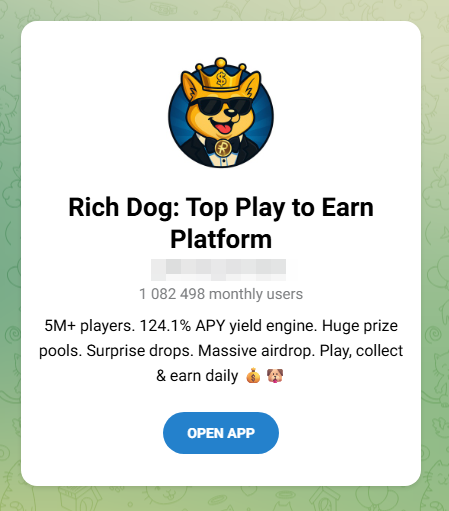
One warning sign is the promise of guaranteed triple-digit returns and free money for tapping a button. That’s not how legitimate financial products work.
That’s the whole machine working end to end: football is the doorway, the malicious advertising network is the engine, and the scams are what it’s actually selling.
How to watch the World Cup safely
These “Free HD stream, every match, no catch” sites use football as bait to funnel visitors through a malicious advertising network. Here’s how to stay safe:
- Use official broadcasters and streaming services. That’s where the legal and safe coverage lives.
- Treat “every match, free, HD, no signup” as a red flag. Broadcast rights are expensive. If a random website is giving everything away for free, it’s making money some other way.
- Don’t follow a maze of interactions. If a streaming site opens pop-ups, launches extra tabs, or sends you through endless “click to continue” screens, close it.
- Never trust warnings or download prompts on these sites. Don’t download anything, install anything, or enter any information.
- Block ads and trackers in the browser. A tool like Malwarebytes Browser Guard can block the advertising and tracking domains these sites rely on, helping stop pop-ups and redirects before they load.
- Keep your software up to date. Browser and operating system updates often fix security vulnerabilities that attackers try to exploit.
- Use up-to-date, real-time anti-malware. If you do click something malicious, products like Malwarebytes Premium can block and remove malware before it causes damage.
Indicators of compromise (IoCs)
Domains
arenaworldcupfootball.xyzfootballworldcup.xyzfreeworldcup.xyzfreeworldcupstream.xyzfreeworldcupstreaming.xyzlivestreamingworldcup.xyzlivestreamworldcup.xyzliveworldcup.todayliveworldcup.xyzliveworldcup2026.xyzliveworldcupmatch.xyzmatchoraworldcup.worldmatchworldcup.xyzsportivaworldcup.xyzsportworldcuponline.xyzwatchworldcup.watchwatchworldcup.worldwatchworldcup2026.xyzwatchworldcupfree.livewatchworldcupfree.onlinewatchworldcupfree.xyzworldcup2026match.xyzworldcuparena.xyzworldcupfoootballmatch.xyzworldcupfootball.liveworldcupfootballmat.liveworldcupfootballmatch.liveworldcupfootbmatch.xyzworldcupfreeonline.xyzworldcuplive.worldworldcuplivestream.onlineworldcupmatch.onlineworldcupmatch.worldworldcupmatch.xyzworldcupmatchlive.liveworldcupsoccer.liveworldcupsoccermatch.liveworldcupstreameast.onlineworldcupstreameast.xyzworldcupusa.worldworldcupusa.xyz
Stop threats before they can do any harm.
Malwarebytes Browser Guard blocks phishing pages and malicious sites automatically. Free, one click to install. Add it to your browser →
