
Smart glasses with camera are becoming more common, fitting into everyday life. They look like n 2026-6-14 20:36:44 Author: www.mobile-hacker.com(查看原文) 阅读量:7 收藏
Smart glasses with camera are becoming more common, fitting into everyday life. They look like normal sunglasses — but they can record video, capture audio, and take photos at any moment.
To address privacy concerns, manufacturers such as Meta add visible indicators and built-in safety features. There are also apps that try to detect these devices nearby, such as Nearby Glasses. However, it didn’t work in my case using Meta Ray-Ban Generation 2, and on top of that this app can be easily spammed with fake signals, making them unreliable.
After testing how all of this works in real life, it turns out the situation is more complicated than it seems.
This post explains:
- Why the recording indicator isn’t fully reliable
- Why detection apps may not work as expected
- And how they can be easily tricked with fake signals
Smart Glasses Can Record Without You Noticing
Meta Ray-Ban smart glasses allow hands-free recording in public spaces, including high-resolution video, audio, and photos. To improve transparency, they include a small LED light that pulses when recording starts. In theory, this gives people nearby a clear signal that recording is happening.

The Problem With the Indicator Light
The LED indicator is meant to protect privacy, but it’s not a perfect solution. You can’t fully block it because the glasses include a light sensor that prevents recording in complete darkness. However, this safeguard can be bypassed in practice, for example:
- Covers with a tiny opening that lets enough light reach the sensor
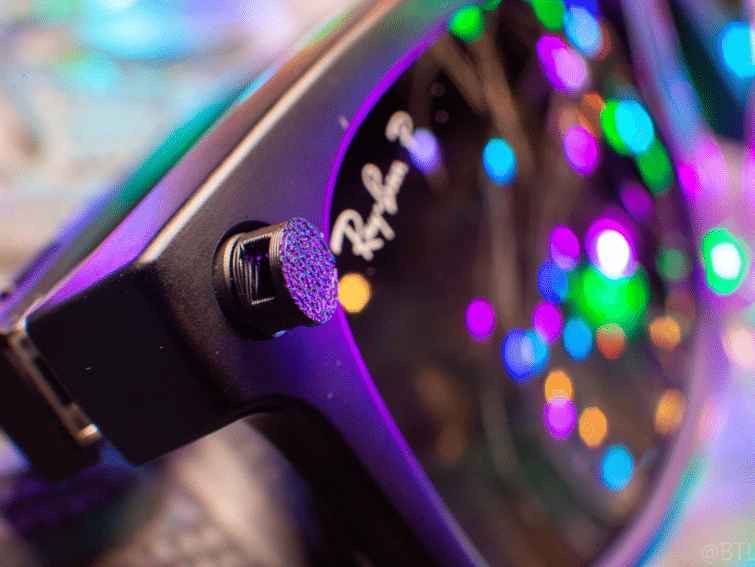
- Accessories designed to reduce or hide the visibility of the LED
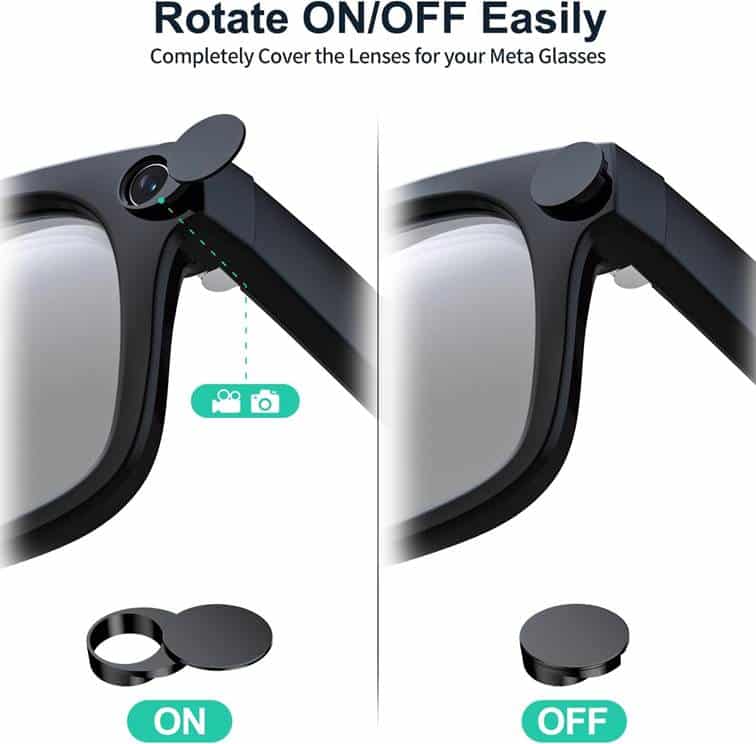
In real-world use, this means the glasses can still record while the indicator becomes very difficult — or nearly impossible — to notice. At that point, recording becomes effectively stealthy.
Can You Detect Smart Glasses Nearby?
Because of these limitations, detecting smart glasses becomes important. Apps like Nearby Glasses attempt to identify such devices using Bluetooth Low Energy (BLE).
How These Detection Apps Work
To keep things simple, many smart devices use BLE to communicate with phones. Instead of connecting directly, they often send out small broadcast messages, called BLE advertisement packets. These are short signals sent periodically, without needing an active connection.
They’re typically used for:
- Pairing (finding the device initially)
- Reconnection (letting your phone know the device is nearby)
- Broadcasting basic identity info — like manufacturer data
In simple terms, devices are broadcasting a message that says, “I’m here.” Detection apps scan for these signals and try to match them to known device types.
Why Detection Isn’t Always Accurate
These BLE signals often include identifiers tied to the manufacturer, which means apps can sometimes recognize that a device is made by a specific company. However, they cannot always determine exactly what kind of device it is. For example, Meta Ray-Ban glasses and a Meta Quest headset may appear very similar at the Bluetooth level.
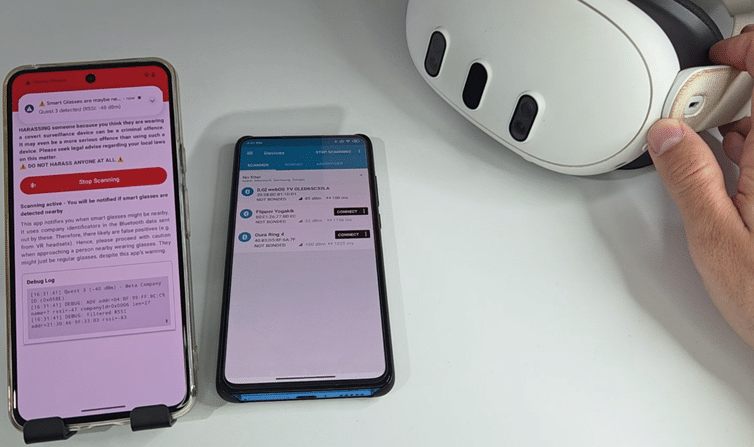
So the app might flag a VR headset as smart glasses, even though it’s something completely different.
Real-World Testing: Meta Ray-Ban Gen 2
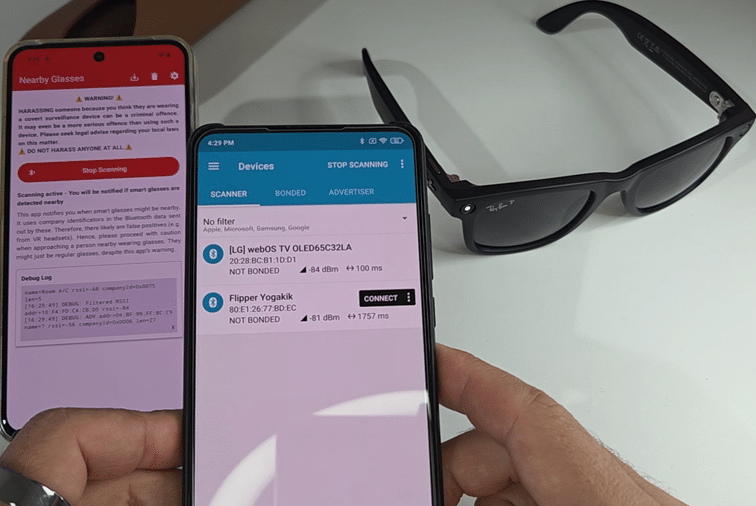
I tested this with Meta Ray-Ban Gen 2 glasses, and the app didn’t find them at all. The reason comes down to how the glasses behave after they are paired and connected to a phone. Once connected, they stop sending out BLE advertisement signals entirely. As a result, detection apps cannot see them, which means that other Bluetooth scanning tools can’t pick them up, such as nRF Connect app. Effectively, the glasses become invisible. This isn’t a bug or limitation of the app — it’s simply how the device is designed to work.
Another Issue: BLE Spoofing
Even when BLE-based detection works, there is another problem — signals can be faked. Because BLE advertisement packets are predictable, they can be generated using common hardware such as smartphone, ESP32 modules, or devices like Flipper Zero. This technique is often referred to as BLE spam.
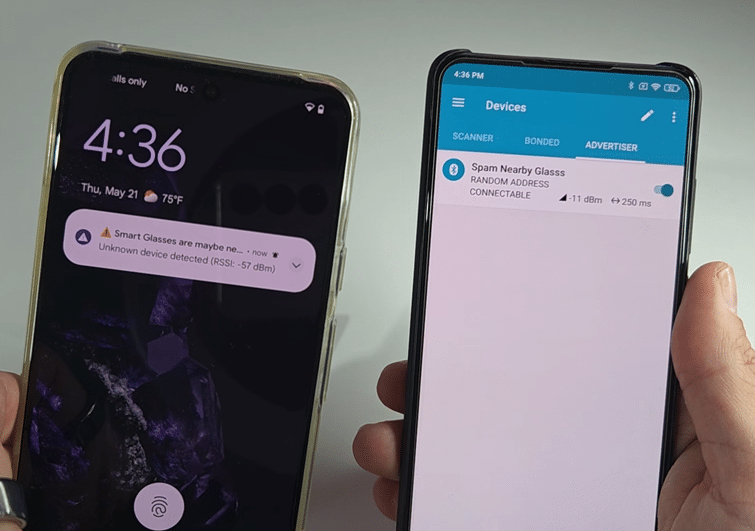
Similar attacks have already been seen in the wild, where devices flood nearby phones with fake Bluetooth signals and trigger unexpected popups or alerts. The same idea applies here: anyone could broadcast fake “smart glasses” signals, causing the app to report devices that are not actually present.
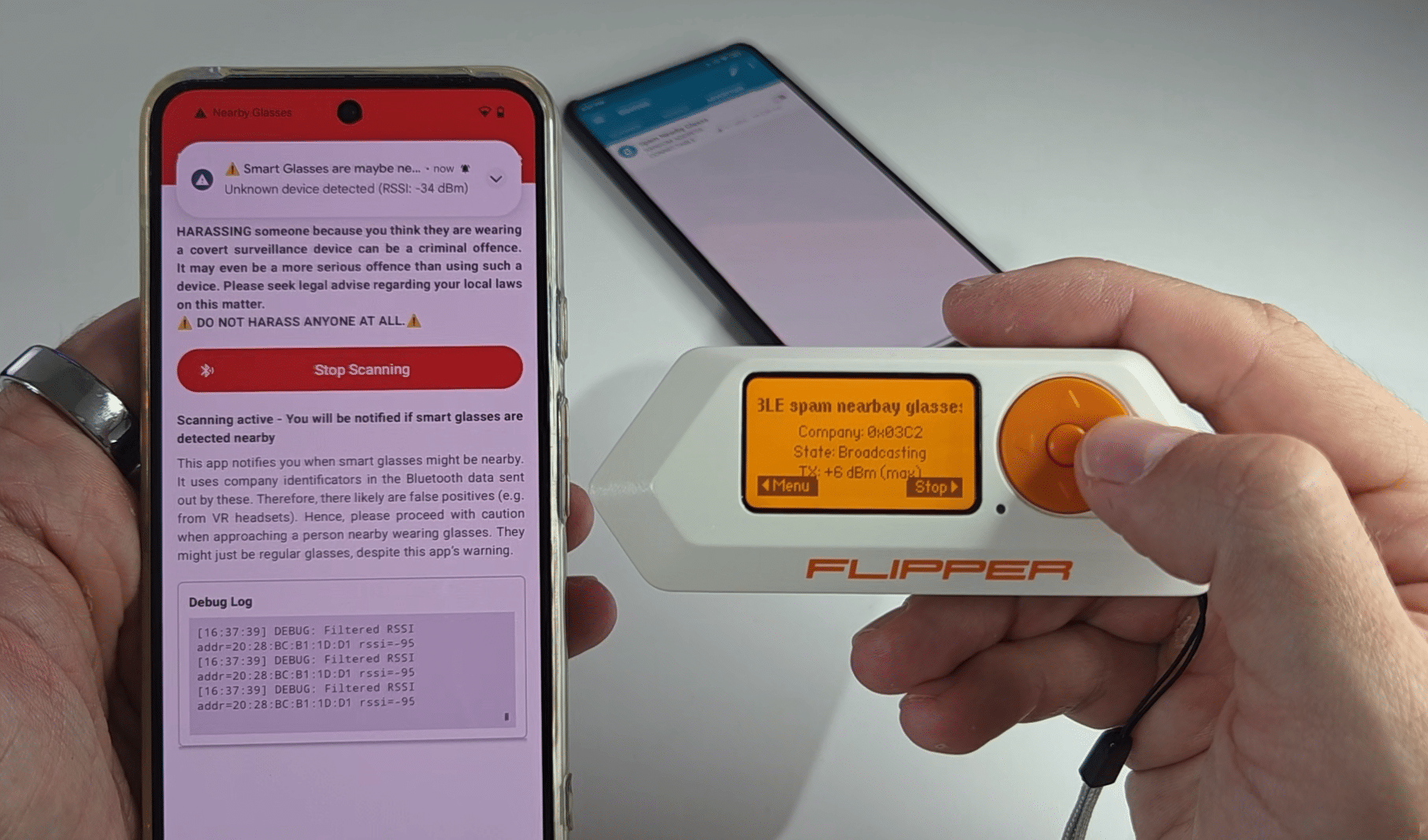
I even vibe coded a PoC app for Flipper Zero to spam Nearby Glasses app, and it worked well, see Figure 7.
What This Means
Putting it all together:
- Some smart glasses (at least Meta Ray-Ban Gen2) can record discreetly
- Visual indicators can be minimized or hidden
- Detection apps rely on BLE broadcasts where some devices simply don’t broadcast them
- And when they do, the signals can be spoofed
Conclusion
Apps like Nearby Glasses are a great idea and could genuinely help increase awareness of smart devices around us.
However, in my testing with Meta Ray-Ban Gen 2, they don’t work as expected — mainly because the glasses stop broadcasting once connected. On top of that, BLE-based detection can be easily manipulated with fake signals.
I haven’t tested other brands or generations, so this approach may still work in some cases.
But for now, the core issue remains, stealthy recording is still possible and relying on detection apps could give a false sense of security.
如有侵权请联系:admin#unsafe.sh